Estate Cleanout Guide for Warwick, RI
Clearing a family home is as much an emotional job as a practical one. Here's a calm, orderly way to work through an estate cleanout in Warwick - and how a container on the driveway makes it manageable.
In this guide
- Start with a plan, not a dumpster
- Sort into keep, donate, divert, discard
- What can't go in the box
- Choosing the right size
- Working at your own pace
Clearing out a family home is one of the harder jobs a person takes on, and it usually arrives at a hard time - a death, a move to care, a downsizing. The practical side and the emotional side are tangled together, and the practical side is where a bit of order helps most.
Here's a calm, workable way through an estate cleanout in Warwick.
Start with a plan, not a dumpster
Before anything leaves the house, walk through it once and decide the rough order - usually the least personal spaces first (garage, basement, attic) and the most personal last (bedrooms, keepsakes). It lets you build momentum before the hard rooms.
Set aside anything that needs to be found before clearing: documents, photos, jewelry, anything with legal or sentimental weight. It's far easier to protect these at the start than to sift for them later.
Only once you know the shape of the job does the container question make sense - and then it's a simple one.
Sort into keep, donate, divert, discard
The workable system is four piles. Keep is what family wants. Donate is usable furniture, housewares and clothing - much of which the Habitat ReStore and local charities will take.
Divert is the material that shouldn't be landfilled: clean metal and appliances for recycling, and hazardous items for the county collection. Discard is everything else - the worn, broken and genuinely spent - and that's what the dumpster is for.
Sorting as you go, rather than dumping everything and sorting later, keeps the container for what actually belongs in it and keeps your cost down.
What can't go in the box
A few categories stay out of the dumpster. Household hazardous waste - paint, solvents, cleaners, oil, batteries - goes to the RIRRC Eco-Depot in Johnston, by appointment, not in the container.
Appliances with refrigerant (fridges, freezers, some AC units) need the refrigerant recovered first; we'll flag which ones qualify. Tires and some electronics also have their own routes.
Everything else from a normal household clearout - furniture, mattresses, carpet, general debris - goes in the box, and we haul it to a licensed facility.
Choosing the right size
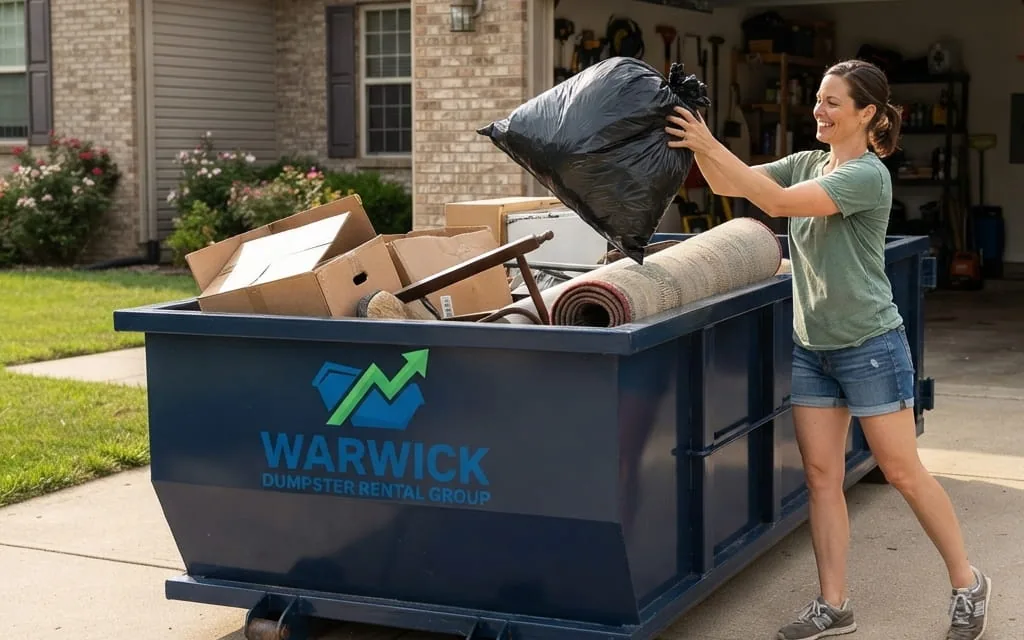
An estate cleanout fills a box faster than people expect, because decades of belongings add up. A 20 yard suits many homes; a fully packed house, or one with a lot of furniture and a full basement and garage, often calls for a 30.
If you're unsure, describe the house when you call - number of rooms, how full, whether the basement and garage are part of it - and we'll size it honestly rather than oversell you.
We can also stage a swap, so you start with one box and we replace it when it's full rather than guessing high from the start.
Working at your own pace
The last thing a grieving or stretched family needs is a meter running. Our rental window gives you room to work through the house at a human pace, and if you need longer we'll arrange it.
We're a local Warwick crew, so you're dealing with people who answer the phone and treat the job with the care it deserves - not a call center.
When you're ready, call (401) 593-9203 and we'll bring the right container and walk you through what goes where, so the practical side is one less weight to carry.
Book a container in Warwick
One flat rate covering delivery, seven days, pickup and disposal.
(401) 593-9203Questions readers ask about this
What size dumpster for a full estate cleanout?
A 20 or 30 yard usually handles a whole-house clearout. Tell us what's in the home and we'll size it honestly, staging a swap if the job runs bigger than one box.
Can you help with a home that flooded or was neglected?
Yes. We bring a container sized for the load, including wet or damaged material, and work patiently through it with you - no rushing.
What should not go in the dumpster?
Household hazardous waste - paint, chemicals, oil - and appliances with refrigerant until it's recovered. We flag what needs the Kent County collection and route reusable items to the ReStore.