Roof Tear-Off Dumpster Guide for Warwick, RI
A roof tear-off is one of the few jobs where weight, not volume, decides the dumpster. Here's how to size it right, place it well and keep the disposal side clean in Warwick.
In this guide
- Shingles are heavy - size for weight
- How many squares, how big a box
- Placement by the eaves
- Nails, underlayment and disposal
- For roofers and homeowners
A roof tear-off looks like a volume job - a big pile of shingle coming off the house - but it's really a weight job, and that changes how you size the dumpster. Get it right and the tear-off drops straight into a right-sized box on a flat price. Get it wrong and you're paying an overage at the scale.
Here's how to handle a roofing dumpster in Warwick.
Shingles are heavy - size for weight
Asphalt shingle is dense. A couple of layers coming off a typical Warwick ranch add up to real tonnage, and that's the number that matters - not how much air is left in the box.
The classic mistake is renting a big 30 yard for a roof, filling it a third full, and being over the weight limit. A right-sized box, priced for the weight, is both cheaper and legal to haul.
That's why a 15 yard is often the sweet spot for a single-family tear-off, with the allowance set so a full load still comes in on the flat price.
How many squares, how big a box
Roofers measure in squares (100 square feet). As a rough guide, a single-layer tear-off on an average home fits a 15 yard comfortably; a larger home, a steep roof, or two or more layers pushes toward a 20 yard.
Multiple layers are the big multiplier - each old layer left on the roof is another full weight of shingle to remove. If you're not sure how many layers are up there, tell us the roof's footprint and we'll size for the likely worst case.
When in doubt we'd rather set the right allowance than watch a job go into overage.
Placement by the eaves
The efficient way to run a tear-off is to position the container right at the eaves, so shingle comes off the roof and drops straight into the box with minimal handling and a cleaner yard.
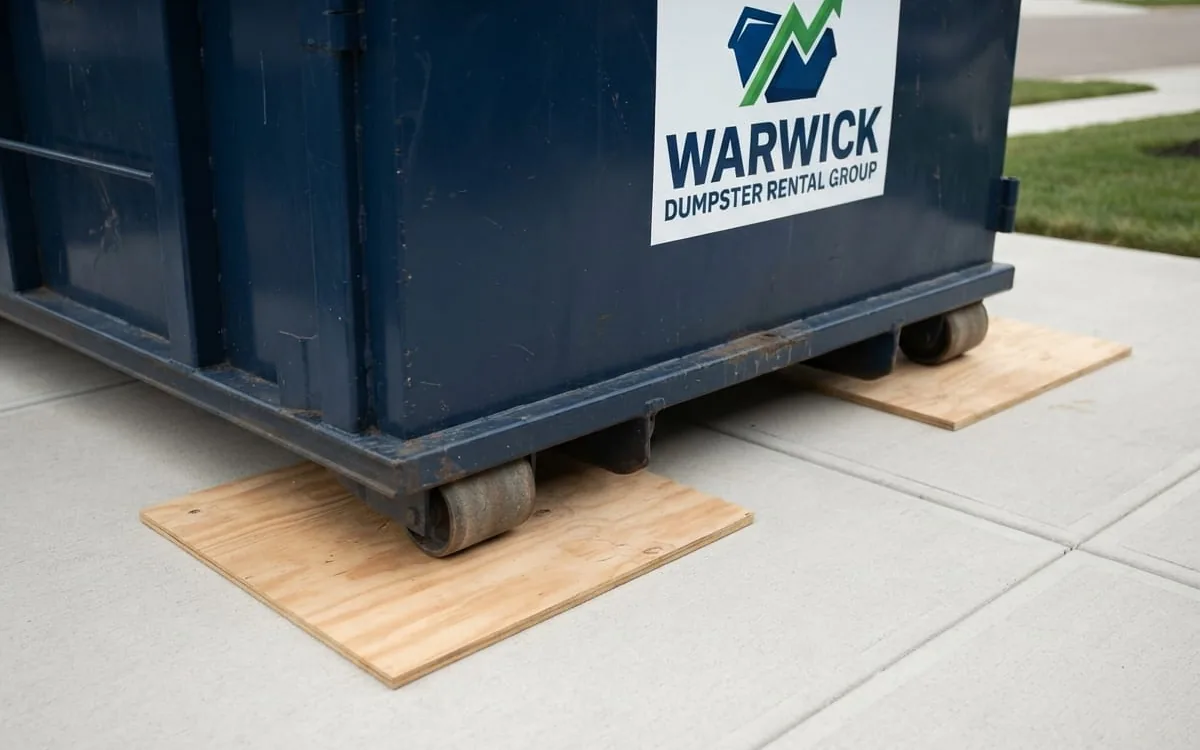
On the glacial ground and tidy driveways here we plank under the rails to protect the surface, and for a tight lot we'll scout placement from a photo before delivery.
Timing the drop to your tear-off day keeps the box from sitting idle and keeps the driveway free until you need it.
Nails, underlayment and disposal
A tear-off is more than shingle - underlayment, flashing, drip edge and a carpet of nails all come off with it. The shingle, underlayment and general roofing debris go to a licensed transfer station or landfill, hauled tarped as Rhode Island law requires.
Clean metal flashing and drip edge we separate for recycling. And a magnetic sweep of the driveway and lawn at the end is worth doing - nails are the one thing a tear-off leaves behind that bites later.
We handle the transfer-station run and the tipping fee so the disposal side is off your plate.
For roofers and homeowners
If you're a roofing contractor, we keep containers swapped on a rhythm across Warwick and Kent County so your crews never wait on a full box, billed flat per pull.
If you're a homeowner doing a single tear-off, we'll walk you through the size and the weight so it's done in one clean pass.
Either way, call (401) 593-9203 with the roof's size and layer count and we'll set the box and the allowance so the job stays on budget.
Book a container in Warwick
One flat rate covering delivery, seven days, pickup and disposal.
(401) 593-9203Questions readers ask about this
What size dumpster for a roof tear-off?
A 15 yard often suits a single-home tear-off - shingles are heavy, so we size for weight rather than volume so you don't hit the limit. A larger or multi-layer roof may need a step up.
Why not use a bigger dumpster for a roof?
Because shingles are dense. A big box fills to the weight limit long before it's full of shingle, so a right-sized box priced for the weight is cheaper and legal to haul.
Where do old shingles go?
To a licensed transfer station or landfill, hauled tarped as Rhode Island requires. We handle the run and the tipping fee and separate clean metal flashing for recycling.